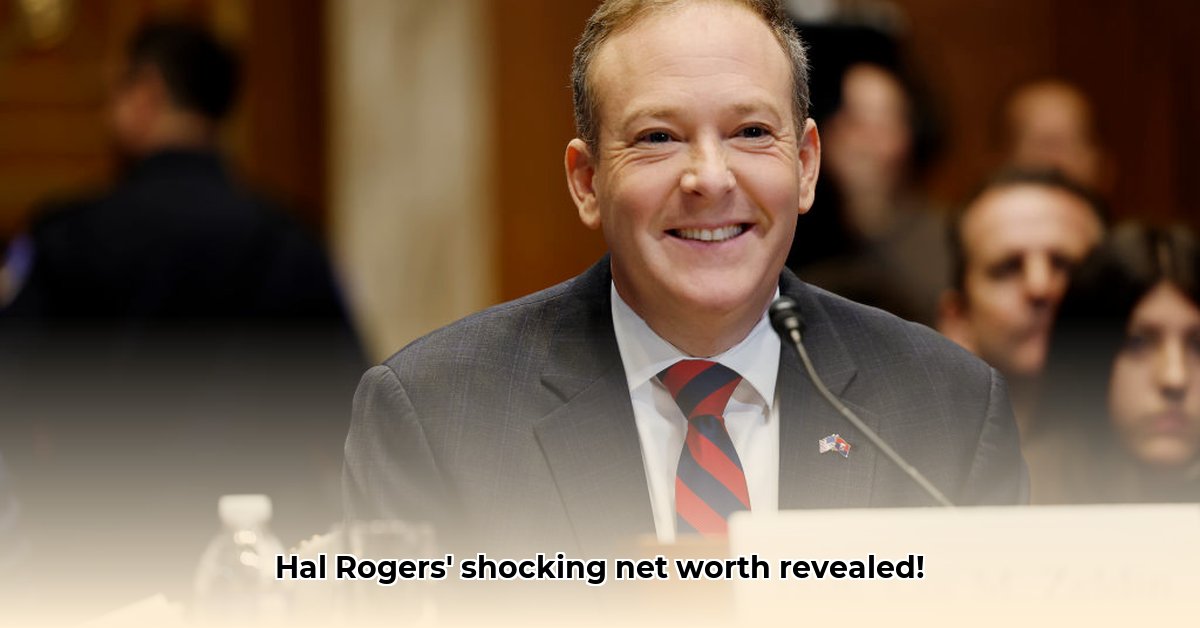
Hal Rogers' Financial Snapshot: 2018 Estimates
Publicly available data from 2018, based on self-reported financial disclosures, estimated Congressman Hal Rogers' net worth at approximately $446,327. It's crucial to understand the limitations of this figure. Self-reported data inherently lacks complete transparency, offering only a snapshot in time and potentially omitting or underrepresenting certain assets or liabilities. Furthermore, asset values fluctuate, rendering any single-year estimate potentially inaccurate. This figure, therefore, should be considered an approximation, not a precise measure of his wealth.
Comparative Analysis: Kentucky's Congressional Wealth
Comparing Hal Rogers' estimated net worth to his colleagues in Kentucky's congressional delegation reveals significant disparities. While precise figures for all representatives are not consistently available in readily accessible public records, existing data indicates a considerable range in wealth. For instance, Senator Mitch McConnell reported significantly higher assets in 2014. This highlights the vast differences in financial backgrounds among elected officials.
How might these financial disparities influence policy decisions? Do those with greater financial resources have disproportionate influence on legislation? These are vital questions that warrant further research. A comprehensive analysis requires more complete and consistently reported data across all members of the Kentucky congressional delegation. Until such data is available, a full picture remains elusive.
Sectoral Investments: A Closer Look at Hal Rogers' Portfolio
The available 2018 data suggests a portion of Hal Rogers' assets were invested in credit unions (approximately $150,000) and commercial banks (approximately $18,000). While these are legal and common investments, they raise important questions about potential conflicts of interest, real or perceived. Could these investments influence his voting record or policy stances on financial regulations affecting these sectors? This is a crucial area requiring further investigation and more transparent disclosure. The lack of precise investment details hampers a thorough analysis of potential conflicts.
Data Limitations and Ethical Considerations
The primary challenge in assessing the net worth of congressional representatives lies in the self-reporting nature of financial disclosures. This system inherently suffers from limitations:
- Inconsistent Reporting: Different representatives may interpret disclosure requirements differently, leading to inconsistencies in reported data.
- Potential for Inaccuracy: Self-reported data can be incomplete or inaccurate, either intentionally or unintentionally.
- Lack of Verification: There's no independent verification of the reported assets or liabilities.
These limitations raise ethical considerations – particularly regarding transparency and potential conflicts of interest. The inherent lack of comprehensive and verifiable information hinders a complete evaluation of potential financial influences on legislative decision-making.
Broader Context: Wealth Inequality and Campaign Finance
The observed wealth disparities within Kentucky's congressional delegation reflect a broader societal issue: wealth inequality and its impact on politics. This raises questions about the accessibility of political office and the potential for undue influence by wealthy individuals and interests. The ongoing debate over campaign finance reform underscores the urgency of addressing these concerns. More comprehensive and transparent disclosure requirements, coupled with stricter regulations governing campaign contributions, are crucial steps towards mitigating the potential negative impacts of wealth on democratic processes.
Conclusion: The Need for Transparency and Accountability
Transparency and accountability are cornerstones of a functioning democracy. Assessing the financial standing of elected officials is an essential aspect of promoting both. While the available data provides a glimpse into the financial lives of representatives like Congressman Hal Rogers, significant improvements in financial disclosure are needed. More robust, standardized, and independently verifiable reporting mechanisms are crucial for building and maintaining public trust. Further research into the relationship between wealth, campaign financing, and legislative decisions is essential to ensure fairness and equity in our political system. The current system of self-reporting presents limitations that must be addressed to fully realize the goal of transparency and accountability.